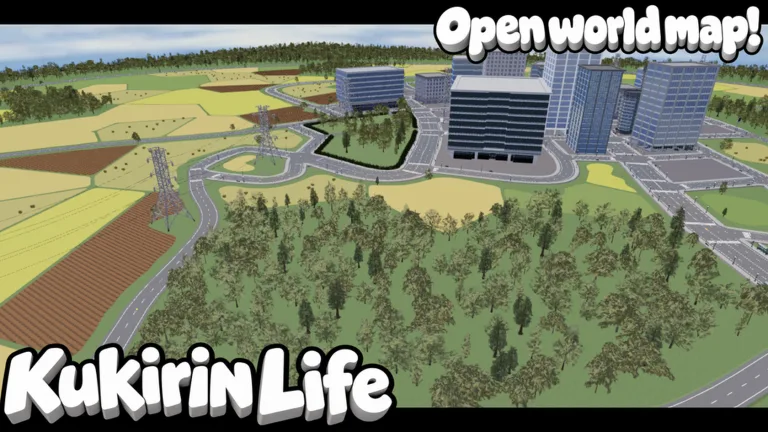
Kukirin Life Rideout Guide: How to Cruise, Stunt, and Group Ride
Master the Kukirin Life rideout experience on Roblox. Discover convoy pacing, handling physics, scooter classes, and server performance optimization.
Published: Kukirin Life Wiki Editorial Team
Table of Contents
What Is a Kukirin Life Rideout?
A rideout in modern riding culture is a collective street session where riders assemble to travel along a shared route, execute maneuvers, and cruise at a set pace. Within the Roblox sandbox, this culture translates into vehicle meets where players roll out on personal electric vehicle (PEV) models modeled after modern electric scooters.
In Kukirin Life, developed by Mukbang Lovers, the rideout serves as the primary social and mechanical loop. Players spawn into the testing space, select their rides, and navigate open roads. Unlike closed-circuit racing titles where the goal is reaching the finish line first, a rideout prioritizes road presence, smooth spacing, collective stunt runs, and mechanical testing.
Community reports show that successful rideouts rely heavily on communication. Because early testing builds feature evolving physics constraints, uncoordinated groups often collapse into chain-reaction pileups. Learning how to manage your momentum, read road geometry, and stay aligned with the group separates clean convoy runs from frustrating lobby resets.
Scooter Profiles in Group Convoys
Roblox riding simulators typically categorise personal electric vehicles into distinct operational tiers based on power output, suspension stiffness, and top speed. In Kukirin Life, understanding these categories helps you pick a model that matches the pace of the convoy.
Urban Commuter Cruisers
Balanced, single-motor scooters tuned for moderate top speeds and sharp turn response. These machines excel in tight alleyways and low-speed urban formations where rapid braking and micro-adjustments prevent collisions with neighboring riders.
Dual-Motor Speed Monsters
High-velocity performance scooters featuring aggressive acceleration curves and stiff suspension setups. While unmatched in long-stretch highway pulls, their sensitive throttle response makes them prone to overshooting corners if driven carelessly within tightly packed packs.
Rough-Terrain & Stunt Rigs
Heavy-chassis variants equipped with high-clearance swingarms and wider footboards. These builds absorb curb transitions and roadside elevation drops with minimal chassis bounce, making them the top choice for riders taking the flanks or jumping obstacles.
Selecting the right vehicle depends directly on your designated role during the cruise. The following breakdown highlights how different scooter profiles function during a community rideout:
Scooter Class
Convoy Role
Primary Advantage
Main Handling Risk
Recommended Lane Position
Commuter Tier
Pace Follower
Predictable braking and easy turn adjustments
Limited acceleration to catch runaway packs
Center pack / Mid-convoy
Performance Tier
Route Scout / Sprinter
Exceptional top speed on straightaways
Physics fling on sharp turns or sudden stops
Convoy Lead or Open Flanks
All-Terrain Tier
Sweeper / Stunt Wing
Absorbs pavement drops, curbs, and dirt detours
Heavier turn radius at full speed
Rear guard / Outer perimeter
How to Organize and Execute a Clean Rideout
Running a smooth group session requires structural preparation before leaving the spawn zone. Without clear guidelines, individual players naturally accelerate at full throttle, stringing out the convoy and causing severe client-side lag spikes when everyone congregates at sudden chokepoints.
Establish a Staging Area: Assemble all participating riders at a wide, flat landmark near spawn. Allow players time to fully load their vehicle assets to avoid initial frame drops.
Designate a Pace Leader: Select one experienced rider on a stable commuter or mid-tier scooter to set the forward speed limit. Nobody passes the pace leader during transit sections.
Adopt a Staggered Formation: Arrange riders into two alternating columns (left and right of the lane center) rather than a single file. This creates an immediate safety margin if someone drops frames.
Set Structured Stunt Windows: Announce designated open-plaza areas or wide intersections for freestyle stunts, burnouts, and wheelies, rather than attempting stunts inside tight corridors.
Deploy a Tail-End Sweeper: Assign a dependable rider to bring up the rear. The sweeper monitors stranded riders who suffer physics glitches, crash into map props, or fall behind.
Following these steps creates an authentic street-meet atmosphere while drastically reducing the chaos common to public testing servers.
Vehicle Physics, Braking, and Stunt Mechanics
Operating a scooter in a Roblox environment presents unique physics quirks. Unlike car chassis that rely on wide four-wheel bases, two-wheeled scooter scripts are inherently sensitive to balance calculations, center-of-mass shifts, and collision mesh hitboxes.
Throttle Modulation Over Full-Throttle Pinning
New players often hold down the throttle key continuously. In group rides, this creates an accordion effect: you accelerate too fast, slam on the brakes, and cause the rider behind you to ram your rear tire. To maintain a smooth cruising rhythm, tap or pulse your forward key once you match the pace leader's speed. This keeps your motor rpm steady without sudden physics hitches.
Tip
When riding in formation, leave at least two scooter lengths between your front wheel and the rear wheel of the rider diagonally ahead of you. This safety cushion accounts for latency fluctuations between different players' connections.
Managing Elevation and Curb Collisions
Testing builds frequently experience collision bugs when transitioning between street asphalt, sidewalk curbs, and terrain edges. Hitting an uneven road seam at high velocity can lock your front wheel mesh, pitching your avatar forward or causing your scooter to spin wildly.
When mounting a sidewalk or approaching an incline, align your approach as close to a 90-degree angle as possible and ease off full throttle. If the vehicle supports manual weight shifts or jump mechanics, tap the jump button right before the edge to relieve downward pressure on the front suspension.
Warning
Avoid hard braking while simultaneously turning the handlebars at high speeds. In early physics configurations, this maneuver often triggers a rollover script or unseats your character model.
Server Performance and Lag Mitigation
Because Kukirin Life is maintained as an active testing place, high server populations combined with dense vehicle particle effects can degrade client frame rates. When twenty riders gather in a single street intersection, physics tick rates drop, resulting in rubberbanding and erratic collisions.
Player experience shows that small adjustments to your client configuration improve overall stability during major community events.
Lower Manual Graphics Levels: Drop your in-game graphics slider to level 3–5 during massive gatherings to prevent asset render bottlenecks.
Disable Extraneous Overlays: Close background streaming tools, heavy browser tabs, and system resource monitors that drain single-core CPU throughput.
Check Server Ping Before Staging: Select regional servers where your latency remains consistently below 100 ms to avoid physics desync.
Clear Mesh Clutter: If the game provides client settings to disable redundant particle trails or tire smoke, toggle them off during 10+ rider sessions.
Re-spawn Bugged Rigs: If your scooter begins jittering on flat asphalt, dismiss and re-summon the vehicle to reset its collision envelope.
Ensuring your client runs smoothly keeps your vehicle responsive, allowing you to react instantly when the pack slows down or takes an unexpected detour.
Is Kukirin Life an official KuKirin commercial simulator?
No. While the title is inspired by the branding and design language of modern KuKirin electric scooters, the Roblox place is an independent testing experience created by Mukbang Lovers. Commercial scooter specifications, warranties, and sales offers found on official retail portals do not reflect in-game development roadmaps or vehicle statistics.
Why does my scooter randomly bounce or launch into the sky?
This behavior stems from physics constraint conflicts common in testing builds. When a two-wheeled vehicle's collision box clips into terrain seams, sidewalk corners, or another player's vehicle, the Roblox physics engine attempts to resolve the overlap by applying high repulsive force. Keeping a safe distance from other riders and avoiding sharp curb angles resolves most clipping issues.
How can I find active rideout lobbies?
Because formal matchmakers for rideouts do not exist within early testing places, community sessions are coordinated through player groups, social channels, and word-of-mouth server hopping. Look for servers with consistent player counts where groups congregate near main spawn plazas rather than scattering across distant map corners.
What should I do if the lead rider begins rubberbanding?
If the convoy leader experiences high packet loss, their scooter will teleport back and forth on your screen. When this happens, do not attempt to pass them. Increase your following distance to three or four vehicle lengths and allow the server to reconcile positional data before tightening the formation.